Essays on technology, culture, and society.

Taste in the Age of Machines

AI can generate infinite content, but it can't decide what should exist. Taste, built through exposure and discernment, is the real edge. Read →

A Field Guide to Antimemetics

On Nadia Asparouhova's book about ideas engineered to disappear, and why some of the most consequential ideas resist spreading. Read →

You Don't Get to Choose

The consumer doesn't control the means of production. The technology arrives whether anyone votes for it or not. After Ellul. Read →

The Phones Aren't Doing It to You

Envy, narcissism, loneliness: things tech amplifies, not creates. Why the fentanyl analogy for social media is absurd. Read →

Software Isn't Free

The largest public-goods experiment in history, paid for by ads, resented most by the people who benefit most. Read →

Rational Optimism Is Always the Way Out

Technology has always run on one belief: that problems can be solved and progress is possible. In a world growing more complex and fragile, rational optimism is the only real alternative to nihilism. Read →

Artificial Intelligence

Taste in the Age of Machines

AI can generate infinite content, but it can’t decide what should exist. Taste, built through exposure, discernment, and intent, is the real edge in the AI age.
·15 Jan 2026 ·11 min read

If you’ve been listening to your favorite influencer, you’ve probably heard the gospel: “taste” will be the biggest differentiator in the AI era. LLMs can now write, draw, and compose with minimal prompting, but what they produce often feels lifeless. “Slop,” as the internet calls it. Taste, supposedly, is the antidote.

The general sentiment is directionally correct. In a world where everyone has outsourced thinking and production to machines, those who take back the means of production and infuse real taste into what they make will stand out. If we’re being slightly religious about it, we might say the tasteful shall inherit the earth.

But before we can talk about cultivating taste, we need to understand what it actually is. Taste (a.k.a. “aesthetic taste”) is the ability to judge the aesthetic value of an object. It is defined by heightened sensitivity to beauty, form, structure, and harmony in the things we see and in the world around us. Taste is deeply personal, influenced by individual perceptions, backgrounds, and experiences, and yet remains universally influential in the human experience.

People talk about “taste” as if it’s a gift, a talent that some people are born with. But this is not entirely correct. Taste can and is often cultivated through experience, exposure to different media and art forms, and conscious effort. As your experience broadens, your ability to make nuanced aesthetic judgments becomes more refined.

Taste is heavily influenced by what (and how much) you consume. People who’ve seen more of the world (music, art, writing, design, film, even code) develop a mental library that lets them distinguish the good from the bad. More importantly, their own creations tend to be better on average, often because they’re drawing from a broader range of influences and mixing them in new ways.

Nowhere is this clearer than in music. Think about Dr. Dre. One of his most iconic beats came from sampling The Edge, an obscure 1960s jazz track by David McCallum. You don’t “luck” into brilliance like that—you get there by listening widely and being obsessive about what you listen to. Dre likely reviewed hundreds of songs before choosing the one he sampled for The Next Episode. That kind of taste comes from an almost pathological curiosity about sound.

This pattern (relentless exposure followed by recombination) is universal. It’s what people mean when they say everything is a remix. There are hardly any truly new ideas or creations. Whatever you make, you’re building on what came before. The people who do this best are the ones who’ve absorbed the old stuff deeply enough to know what to borrow, what to discard, and how to remix it into something fresh.

The same principle applies far beyond music. The best writers are almost always the most voracious readers. That’s how they can tell good prose from bad, often from first principles rather than from a manual like The Elements of Style. It’s also how they learn what to select and remix from earlier work. You can’t stand on the shoulders of giants if you haven’t done the work to climb up there in the first place. Taste is the strength you build by “lifting” all the art that came before you.

Similarly, the best filmmakers are cinephiles first. Ask them about their favorite movies, and you’ll see their taste immediately. They’ll name the movies they loved—the films that inspired them to become directors. They also borrow inspiration from the old masters and weave these influences into new films that keep cinema alive. In another timeline, some of these directors might have become critics, given how deeply they understand what makes a film work and how keenly they see its flaws and positives.

The same feedback loop of exposure, pattern recognition, and refinement shows up even in sports. Kobe Bryant perfected the fadeaway shot and made it more graceful than Michael Jordan ever did. Beyond raw talent, Bryant benefited from years of watching tape, noticing subtle patterns across eras and players, and mixing those influences into something new and unique. His edge was perceptual sharpness, honed over years of obsessive study, that went beyond pure physical skill. That’s what allowed him to see things other players missed and make impossible, highlight-worthy shots every night he stepped out on the court.
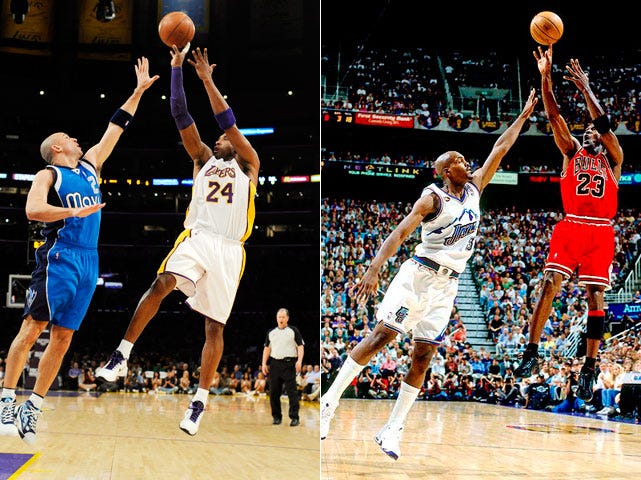
Notice any similarities?

Across every domain, the story repeats: taste is the ability to see and recognize patterns invisible to others because you’ve seen so much before. It’s less about genius and more about the accumulation of intuitions that compound into instinct and discernment.

Of course, there’s a catch: developing that kind of discernment takes stamina. No one likes poorly made art, but to develop taste, you have to expose yourself to the bad stuff, too. You can’t know what’s good without contrasting it to something else. The grind of sitting through mediocrity is what refines your sense of what works and what doesn’t.

The infinite slop machine

There’s a subtle misunderstanding that degrades the discourse around taste in the AI era: many assume “human” = “tasteful” and “AI” = “slop”. That’s wrong. The average LLM actually has more taste than the average person, largely because it has been exposed to vastly more material. It recognizes structure and style better than most people do. Prompted well, it will outwrite, outproduce, and outcode the median human easily.

This cognitive error stems from a lack of understanding of what “slop” really means. Slop doesn’t mean “AI-made.” Slop means generic. Slop is the output of a process designed to scale production while minimizing differentiation. Fast food is slop because it’s engineered for the lowest common denominator. A Michelin-star meal isn’t, because it reflects a chef’s intent, has variety, and involves creative risk. Human creativity emerges when we break the template, when we add something else that wasn’t in the recipe.

“AI slop” fatigue feels visceral because the outputs are so similar and undifferentiated. Humans crave variety, which is why your minds start to rebel after seeing a thousand nearly identical outputs. It’s like eating the same cookie every day until you want to throw up. Some people are more sensitive to that sameness and feel their “Spidey sense” tingling when exposed to mass-produced slop. Others, especially those low in openness to experience, hardly mind. They’ll happily consume the same cookie forever.
Slop is the famine of abundance: near-infinite output leaves us starved of meaning, joy, and nourishment.

It is important to note that slop predates AI. We’ve been making slop art, music, literature, and design long before LLMs showed up. Wherever repetition dominates and predictability pays, creativity declines, and the slop output follows.

Take music, for example. Thousands of people go to college to learn the rules for making it. They study chords, progressions, instrumentation, structure—everything required to produce something that sounds “pleasant.” But learning fundamentals and writing your own song doesn’t automatically mean you have taste. You can know what good music is, you can recognize bad music, and still produce something forgettable.

If your song follows a strict formula and sounds like anything anyone else could have written, it’s undifferentiated slop. It has no individuality, no presence, no variety. It’s the kind of track you can play as background ambience without provoking emotion—acceptable if that’s the intent, but lifeless otherwise. It might appeal to the masses, but that’s only because they’ve never learned to appreciate anything else. You’re making slop.

The same holds for film. Consider the stereotypical popcorn movie (a film engineered for mass appeal). The average popcorn movie is light, entertaining, and formulaic: the story is predictable (e.g., good triumphs over evil), the characters are predictable, and the dialogue is predictable. Everything about it feels like it rolled off a conveyor belt built for “content.” The movie ticks off the right boxes but leaves no emotional impact. That’s slop.

You can notice when slop pervades the real world, too. To illustrate, every basketball player learns the fundamentals (dribbling, passing, shooting), but only the greats add their own flavor. Jordan had his mid-range jumper, Olajuwon had his dream shake, Curry had his logo three, and Shaq had his powerful dunk. Each of those moves broke the rulebook and gave the player a signature. That signature is taste in movement—the thing that separates stars from sound but forgettable players. No one watches the NBA for “fundamental basketball”; we watch for the flair.

Across every field, the pattern repeats. You can follow the rules and produce passable output...or you can depart from the template and make something distinct. Taste is what lets you push to the margins, break form, and inject your own sensibility into the mix. LLMs may flood the world with technically adequate content, but only the tasteful—those willing to suffer through slop, learn its limits, and then exceed them—will produce work that actually moves people.

So you want to develop taste

There are really only two ways to have taste: (a) Be born with it, or (b) Develop it. Does (a) contradict everything we’ve said so far about the origins of taste? Not really. Some people are indeed born with a heightened sensitivity, an inborn ability to perceive beauty, form, and structure with unusual clarity. These people often show latent ability that manifests without extensive practice.

Mozart is the classic example. The grandmasters of classical music often reached their prime later in life, as years of practice compounded into mastery. But Mozart was a wunderkind—a prodigy whose grasp of musical taste and form appeared early. He didn’t need to write a thousand operas to know what a good one sounded like. His ear was already tuned to the differences between good and bad music. Mozart was born with taste.

But we are not all Mozart. For the rest of us mere humans, taste is something we cultivate. You do need some baseline qualities to develop taste, chiefly an attraction to quality and a curiosity about what makes things good. You must be able to pause to understand what you’re consuming and why you like it.

Curiosity takes effort, which turns off most people and ensures they’ll consume slop mindlessly. While people intent on developing taste optimize for curiosity, the rest optimize for convenience. They watch whatever’s recommended, listen to whatever’s trending, and eat whatever’s nearby. Having to think about whether their consumption habits are good or bad feels like too much work.

Developing taste requires a different kind of consumption, one driven by curiosity rather than convenience. You go on little voyages of discovery: reading beyond bestseller lists, listening to random songs from niche artists, and watching films that catch your attention, not just those critics (or streaming services) recommend. You build your own mental map of what feels rich, surprising, or alive and develop your own heuristics for judging quality.

As mentioned earlier, you have to consume both the good and the bad before you can tell them apart. You can’t outsource that process. You can’t let Spotify, Netflix, or The New York Times decide for you. Build your own playlists. Pick your own books. Choose your own films. Taste emerges from asserting independence and agency, from putting your twist on the cookie recipe.
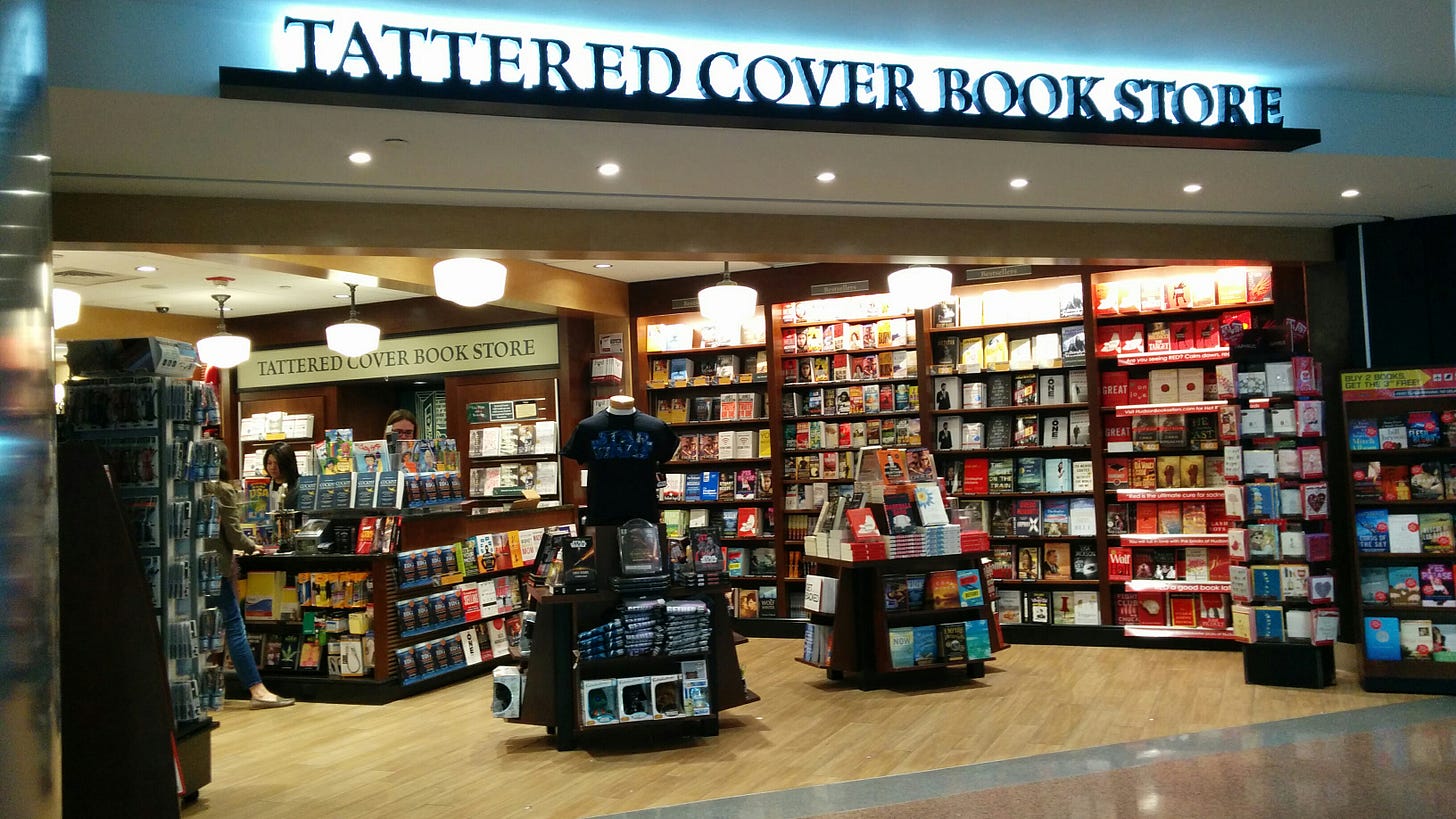
Go beyond the airport bookstore!

But what if you don’t have the time? What if you can’t spend weekends in galleries, concerts, and theaters? What if you’re another 4HLer trying to make ends meet and have little time to spare for side quests? Then you must learn to study and notice everything around you.

Get better at studying what makes good things good. If you can’t consume endlessly, pay deeper attention to what you do consume. You don’t always have to sift through every rock before knowing what a diamond is—you can also train yourself to recognize a diamond when you see one.

Not everyone will master the rules of every craft or develop a critic’s vocabulary. But everyone can notice. When someone says a house is beautiful because of its arches, look at the arches yourself. See how they’re designed. Notice how they make you feel. Observe what they make you think.

Do this with every product, work of art, or creation that seems to radiate taste. Ask yourself: Does it leave me inspired and wanting to create something myself? Does it reveal the depths of human creativity? Does it show beauty in form and symmetry? What did the creator do to trigger this response?

Opening your senses—really opening them—is difficult, but necessary. Pay attention. Study what moves you. Learn to see and feel at a higher resolution. You might glimpse what makes the best things so special, and the extra sauce that gives them their beauty.

The tasteful shall inherit the post-AGI earth

In the end, taste isn’t about status or sophistication. It’s about learning to see the world in higher resolution. The closer you look, the more patterns you begin to recognize, and the more you realize how few people are truly looking at all. Most drift from one recommendation to the next, consuming whatever is placed in front of them. The tasteful, by contrast, are deliberate. They pause, study, and notice the world around them in high fidelity.

That’s what taste really is: an evolved form of noticing—the ability to pay attention long enough to separate what merely exists from what deserves to exist by merit of its beauty. It’s less about having “good opinions” and more about developing an inner tuning fork that vibrates when you encounter something beautiful, coherent, and emotionally resonant.

As AI automates competence, human sensitivity will matter more than ever. Machines can generate infinite output, but they can’t decide what should exist and why. They can predict style but not significance; they can imitate taste but never embody it. The future won’t belong to those who merely produce, but to those who discern—the ones who can look at an endless sea of options and know what needs to be added, removed, or remixed.

Culture

A Field Guide to Antimemetics

Nadia Asparouhova’s new book, “Antimemetics: Why Some Ideas Resist Spreading”, explores the latent power of ideas that are engineered to disappear.

·10 Jan 2026 ·15 min read

Memes have been part of the discourse since Richard Dawkins published The Selfish Gene in 1976. Dawkins defined “memes” as units of cultural transmission—ideas and concepts that spread through imitation. Any idea that replicates by passing from one mind to another is a meme. A meme can be a belief system, a set of behaviors, an ideology, a viral catchphrase, a fashion trend, a cultural artifact, or an urban legend.

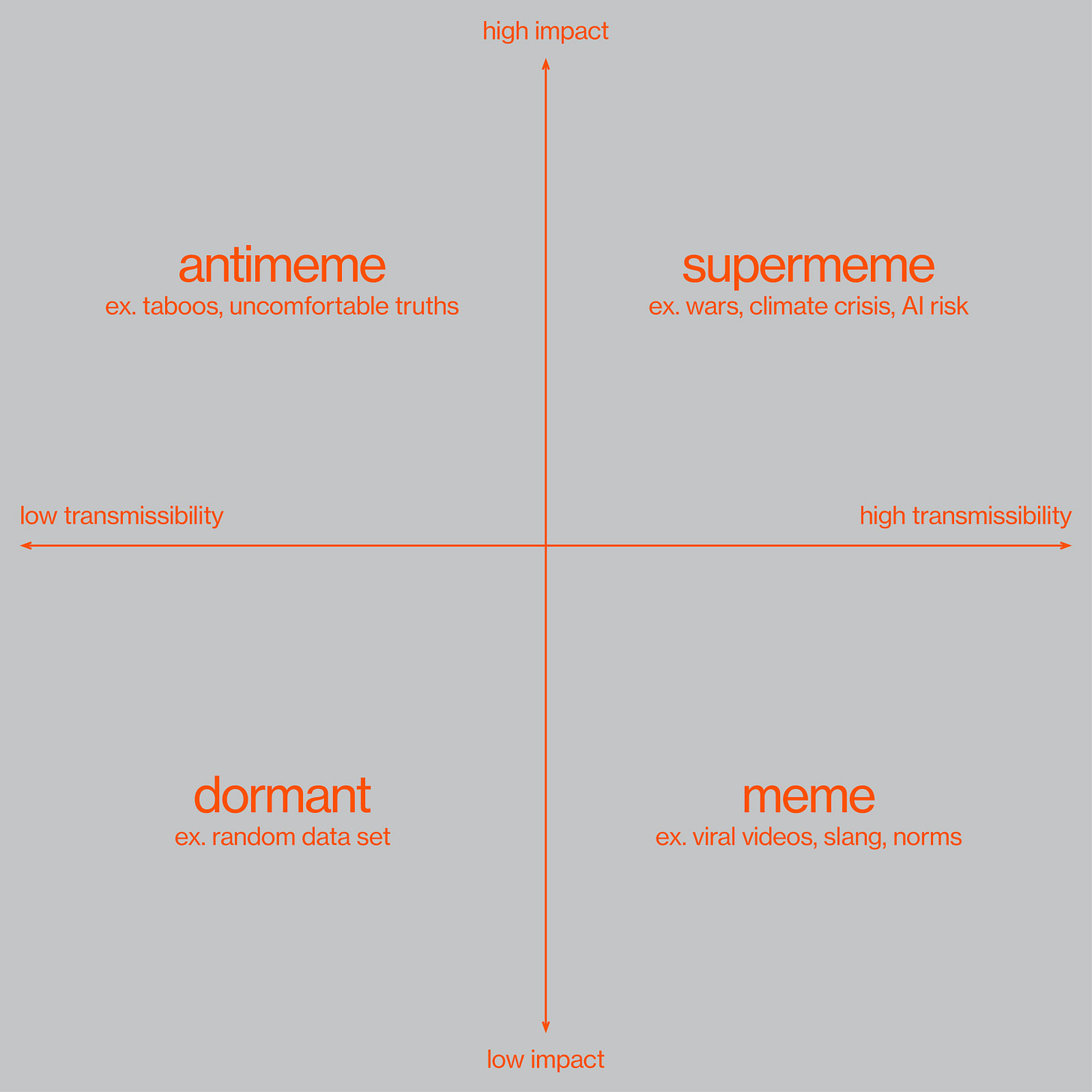
But if memes are defined by virality, antimemes are defined by antivirality. Antimemes refer to ideas and concepts that are difficult to share, notice, or remember. Antimemes include pieces of information we’re disincentivized to transmit and recall because they are dangerous (taboos), complex (economic theories), mundane (legal documents), or risky to disclose (bank passwords and social security numbers). Antimemes appear in various contexts, but they all share the same quality: resistance to spreading.

Antimemes survive by evading awareness and remaining obscure; they are the opposite of memes, which survive by being remembered and shared. If an idea feels hard to remember, share, or discuss for any reason, it is antimemetic by nature. Memes and antimemes are two coequal forces of the modern-day attention economy. While memes get most of the cultural airtime, our world is shaped just as much by the ideas we overlook, forget, or fail to discuss as the ones we notice, remember, and share.

In Antimemetics: Why Some Ideas Resist Spreading, Nadia Asparouhova (who has previously written on the open-source movement) provides a beginner-friendly introduction to the nascent field of “antimemetics,” and explains why some of the most consequential ideas of our time struggle to take root. The book is the first serious exploration of antimemes and contributes to the understanding of the processes by which ideas spread, fade, or vanish entirely in complex information environments.

Life Imitates Art

The idea of “antimemes” first gained popularity following the release of There Is No Antimemetics Division, a sci-fi thriller by Sam Hughes (a.k.a. qntm). In the TINAD, antimemes are anomalies with self-censoring properties. They exist within the realm of thought and consciousness as ideas and concepts, but are functionally invisible to human perception. Their very nature prevents and discourages people from noticing, recalling, or spreading information about them.

The antimemes in There Is No Antimemetics Division are “infohazards” or pieces of information that harm the mind simply by being known. In the TINAD universe, individuals who become aware of antimemes risk having their cognitive faculties sabotaged with devastating consequences. Two of the best-known antimemes from the TINAD universe are “SCP-055” and “SCP-3125”, each taking a form that illustrates many characteristics of real-life antimemes.

SCP-055 manipulates memories to prevent anyone from observing or recalling it. For instance, researchers affiliated with the Antimemetics Division of the SCP Foundation (the fictional organization containing infohazards) study SCP-055, make notes, and then immediately forget what they know about the antimeme. As a result of this constant state of forgetfulness, no one can form a complete understanding of SCP-055’s nature and devise a plan for containment.

Unlike SCP-055, which simply erases itself from memory, SCP-3125 actively attacks anyone who fully perceives the antimeme. Those who attempt to reconstruct SCP-3125 or grasp its nature are erased from existence—along with any friends, acquaintances, or colleagues who share their awareness of the anti-meme. This makes SCP-3125 nearly impossible to contain, despite the Foundation’s best efforts.

In TINAD, even the Antimemetics Division itself is an antimeme. Most of the SCP Foundation doesn’t remember that the Antimetics Division exists. The secrecy is by design: since the Division handles anomalies that erase themselves from memory and kill anyone who notices their nature, conventional documentation of its activities would be both impossible and dangerous.

“There is no Antimemetics Division” is something of a meta-joke in this context; the division exists, but is structured as a self-concealing, self-erasing construct that itself escapes awareness and memory.

How do ideas spread?

There Is No Antimemetics Division is the primary inspiration for Asparouhova’s Antimemetics, but readers don’t have to read the fictional precursor to care about the cultural impact of ideas that survive by evading awareness. Antimemetics picks up where the fiction leaves off, turning metaphors into models for understanding how ideas spread in the real world. If some ideas spread effortlessly while others seem to stall on contact, what explains the difference?

Inspired by concepts from epidemiology (the study of how diseases spread), Asparouhova identifies three main factors that influence an idea’s chances of spreading: transmission rate, immunity, and symptomatic period. In the context of antinemetics, the transmission rate captures an individual's willingness to share an idea with others in a network. A high transmission rate means people are eager to share the idea; a low transmission rate means that people are reluctant to spread it. Immunity describes how receptive people are to an idea: a high “immunity rate” means they are very resistant to it and are unlikely to “pick it up” upon hearing about it. Finally, the symptomatic period measures an idea’s staying power (i.e., how long it lingers in individuals after they come to believe the idea).

Successful small-scale memes tend to have high transmission rates, low immunity, and low-to-moderate symptomatic periods. Take cat videos, for example. The average person likes watching, sharing, and seeing cat videos online. Cat videos are innately viral (easily transmitted and low-resistance), but we typically pay attention to them for a few seconds before moving on to other, more important things. Cat videos lack staying power. A few “weighter” memes have high transmission rates, low-ish immunity, and longer symptomatic periods. For example, certain religious beliefs are incredibly memetic and have a persistent influence.

In contrast to memes, antimemes have low-to-high transmission rates, provoke strong immune reactions, and exhibit high symptomatic periods. Social security numbers are a low-stakes example of an “antimeme”: we don’t randomly share SSNs even if some people—ahem, criminals—want that information. This type of antimeme has low transmissibility, doesn’t trigger resistance, and has a long symptomatic period (i.e., SSNs linger in memory even when we’re not consciously thinking about them).

Economic theories are an example of another kind of anti-meme: professors may love to talk about macroeconomics, but the average person is likely to ignore the discussion (partly because understanding macroeconomics is cognitively demanding). In this case, the idea has high transmissibility but falls flat with audiences. Due to their usefulness, however, economic theories are consequential enough to persist while remaining obscure.

Despite their under-the-radar nature, not all antimemes are doomed to obscurity; under the right conditions, antimemetic ideas can escape containment and become memetic. This shift usually requires improvements in transmissibility and a reduction in immunity. Suddenly, individuals become comfortable sharing an idea publicly, and audiences become more receptive to it. Whenever friction decreases, ideas can reach escape velocity and break into public awareness.

For example, gay marriage was largely unpopular and antimemetic in the early 2000s—a combination of social stigma, institutional resistance, and low political capital created enormous friction that blocked its spread. But gay marriage suddenly became memetic once public sentiment shifted, elite support consolidated, and the legal landscape changed. Support for gay marriage feels like the norm today, but the idea of “marriage equality” was once a fringe topic relegated to niche corners of the internet. Future highly memetic ideas may similarly be sitting in obscurity today, waiting for the right cultural shift to break out.

A high-level framework for differentiating between memes, antimemes, supermemes, and antimemes

Asparouhova also introduces a third category of ideas to explain the modern information landscape: supermemes. A supermeme behaves like a meme (low immunity and high transmissibility), but is more abstract and has a longer symptomatic period. Supermemes spread quickly because they resonate emotionally, feel important, and appeal to our individual and collective values. War, climate change, gender equality, human rights, and AI risk are among the most recognizable supermemes.

People are more comfortable focusing on super-memes for longer periods because of the supposed importance of merely caring about them. The lack of specificity in supermemes makes them hard to pin down and resolve (i.e., no one really knows what the “climate crisis” means or how to assess progress). This vagueness allows supermemes to persist for decades or more, even when they inspire no useful action.

Take the example of Alice, an impressionable, young professional who works at a Wall Street bank and lives in New York. Alice might feel compelled to debate the Israel-Palestine conflict online. However, she would make a greater positive impact on the world if she advocated for affordable housing policy in New York City. Unlike the war in Gaza, affordable housing is an issue that directly affects Alice and falls within her sphere of influence.

But supermemes override the logic of “doing the most good”: their gravitational pull degrades our ability to think about other, potentially more relevant or actionable ideas. Asparouhova describes supermemes as “cognitive black holes” for this reason. This isn’t to say all supermemes are unimportant or entirely undeserving of attention; war is horrific, and we should care about ending conflicts overseas, for example. But in an information environment where attention is a scarce resource, choosing what we focus on is an ethical and practical responsibility.

Attention is all you need.

Attention is the scarcest resource in the modern world. We live inside an attention economy that thrives when we give our focus to whatever happens to appear in our orbit. Facebook makes money when you stay on the platform; YouTube influencers make money when you click an ad; news outlets gain more traffic when a controversial headline captures public attention, etc.

Antimemetics seeks to help readers understand the dynamics of attention, so we can better police our own. Specifically, Asparouhova proposes a more disciplined approach to allocating attention that accounts for the demands of our hyperconnected digital world. Antimemes may not spread widely, but their nature offers valuable insights into how we can keep dangerously sticky ideas out of our heads.

An important insight from Antimemetics is that even the stickiest and most infectious memes can lose their power with enough resistance. We can apply this insight to develop an antimemetics-inspired strategy for addressing harmful memes. For instance, wilful ignorance (the act of deliberately cultivating limited awareness of a topic or concept) can help stave off memetic ideas, no matter how catchy, emotionally triggering, and cognitively invasive they may be. Importantly, this strategy short-circuits the positive reinforcement loop that activates whenever we encounter new ideas and limits the influence those ideas have on our attention.

Asparouhova also recommends that we take steps to preemptively limit exposure to ideas we know are likely to capture our attention. For example, we can ditch social media platforms that force indiscriminate consumption of information in favor of carefully curated alternatives, such as group chats. A global feed makes exposure to the day’s hot-button topic the default experience; by contrast, group chats filter what gets through using the judgment of trusted peers and keep most memetic ideas out of sight.

Group chats and the case for obscurity.

In Antimemetics, Asparouhova explores how group chats became the new centers of intellectual discourse and functioned as incubators for antimemetic ideas. Her thinking is informed by the work of Yacine Strickler, an internet writer and entrepreneur who introduced the dark forest theory of the internet in 2019.

The term “dark forest” comes from Liu Cixin’s sci-fi trilogy, The Three-Body Problem, in which advanced civilizations (including the spacefaring Trisolarans and Earth’s humans) survive by staying hidden to avoid preemptive annihilation from others. In the dark forest, visibility means death, which encourages every actor to go to great lengths to conceal their presence.

Strickler drew on this metaphor to argue that the internet is becoming its own dark forest—an environment where remaining invisible was often the safest and most rational choice. More specifically, Strickler explained that the rise of cancel culture motivated people to stop participating in publication discussions. Instead, internet users gradually began sharing their ideas and thoughts in private, tight-knit communities made up of friends, colleagues, acquaintances, subscribers, and trusted individuals.

Yancey Strickler, writing about the internet's evolution into a dark forest in 2019. Prescient!

The group chat defined this era of communication (which started in the 2010s and peaked in the early 2020s): individuals turned to private group chats on platforms like iMessage, WhatsApp, Signal, and Telegram to share unfiltered opinions and solicit feedback. These private chats provided a safe, controlled environment for discussing controversial and taboo-breaking ideas without fear of cancellation.

Group chats weren’t the only form of communication to gain popularity during the mid-2010s. Subscriber-only newsletters, podcasts, email lists, private Slack groups, Discord servers and gated channels, Patreon communities, approval-based Mastodon instances, and private Telegram groups also became popular. These spaces offered privacy and insulation from the buffeting forces of public censorship, allowing potentially subversive ideas to develop fully in a safe environment before the existing cultural police could shoot them down. They also enabled conversation with trusted interlocutors—small groups could be selected for people willing to engage with discretion, nuance, and good faith—unlike on major social media sites, where “heretical” ideas could be quickly co-opted by opportunistic commenters for “outrage porn.”

The concept of shielding ideas from premature or unnecessary attention also informs Asparouhova’s discussion of “obscurantism”. Obscurantism is the practice of cloaking unorthodox ideas in dense, complicated prose. Historically, obscurantist writing has helped thinkers and intellectuals avoid censorship and persecution by hiding radical insights in plain sight. The resulting cognitive friction to picking up the idea slows transmission and protects fragile ideas from premature scrutiny (a concept expounded by 20th-century philosopher Leo Strauss).

Obscurantism is not without risks. Some ideas never catch on, or are forgotten entirely, because their initial presentation was too complex and hard to understand. But obscurity can be useful for insights that challenge norms and stray outside the bounds of acceptable discourse. Dense, flowery prose and insider terms filter out the unready, protect the idea from premature scrutiny, and buy time for an idea to develop and become acceptable to a wider audience.

Although it may seem self-evident that all creators want their ideas to spread as far and wide as possible, many of the best ideas begin their lives as antimemes. They are shared only among people we trust, protected by social friction or cognitive difficulty, and refined before release. Dark forest theory and obscurantism both underscore the usefulness of understanding antimemetics. Virality can be a sign of an idea’s viability, but it can just as easily be a death sentence. In an age obsessed with exposure, Antimemetics urges us to nurture our best insights in private—away from the noise and pressure of public platforms. Some ideas need time in the dark before they are ready for the light.

A marketplace of ideas, if we can keep it.

Antimemetics is a reminder that visibility is not the same as importance. Just because an idea is trending doesn’t mean it’s important in the long arc of history; similarly, many ideas that fail to gain traction immediately will become highly influential. So the question becomes: if we know why some ideas vanish, how do we make sure the right ones gain visibility? And how do we leverage our insights to keep the wrong ideas hidden?

The internet, as envisioned by its creators, early adopters, and staunchest defenders, is a marketplace of ideas. Anyone with a connection can post anything they want online on equal footing. In theory, the best ideas should rise to the top. But decades of online life have shown that trivial or toxic ideas can easily dominate public discourse because of their short-term stickiness. At the same time, valuable and consequential ideas often struggle to gain traction for reasons discussed previously. While great ideas can survive for a long time as anti-memes before the public is ready to hear them, we need new mechanisms to surface great ideas when the time is right.

The best ideas often fade away and disappear from public consciousness (unless we deliberately nurture them)

One answer lies in reimagining how we relate to the flow of ideas. Here, Asparouhova introduces the concept of truth-tellers and champions in the public square. Truth-tellers are people who surface ideas before the world is necessarily ready for them, risking their own social capital for the greater good. They are whistleblowers, independent observers, anonymous posters—anyone willing to notice something and bring it up for discussion. Someone has to take the first step of publicly standing behind an idea: without the truth-teller, even the most valuable ideas would stay buried and ignored.

On the other hand, champions are people who persist with an idea after it has surfaced. They pick up on the ideas truth-tellers surface and do the slow, often invisible work of making the idea stick long enough to take root and go mainstream. More importantly, they work to translate ideas into action and ensure abstract discussions lead to meaningful, real-world outcomes.

In this sense, Antimemetics isn’t just a book about why ideas fail to spread. It is a manual with instructions for giving great ideas a fighting chance. The marketplace of ideas won’t fix itself; if we want better discourse, we must stop watching and start acting. With enough truth-tellers and champions, we can crowd out trivial and toxic ideas and cultivate a better, healthier information ecosystem.

The New Antimemetics Division

The field of antimemetics is still nascent and not well-known (one might even call it “antimemetic”). At first glance, it may feel like an extremely online intellectual trend or academic honey trap. But antinemetics has the potential to be a serious intellectual discipline, with great lessons for how we think about the transmission of ideas in an increasingly complex information landscape.

In Antimemetics, Asparouhova offers a strong preliminary framework for understanding the memetic economy, explaining that sociocultural dynamics, online algorithms, and individual psychological quirks shape the rules of attention. But, as Antimemetics emphasizes later in the book, we are not oblivious participants in the matrix. We have agency. We can choose to focus on useful and important ideas that fly under the mental radar, and resist the gravitational pull of ideas that lack any perceivable benefit. The process of reshaping our society begins with curating our attention.

The new Antimemetics Division welcomes anyone who wants to resist the mind’s natural tendency to forget and notice the things that matter. As our attention fractures and memetic overload increases, joining the new Antimemetics Division may well become the only path to clarity and agency in an information-driven world.

Antimemetics is out on Metalabel and Amazon.